If AI Gets 10x Better, Does Your Startup Get Stronger or Disappear?
A simple test for founders: when the model becomes smarter and cheaper, does it consume your product's value or create more demand for it?
I keep coming back to one uncomfortable question when I look at AI startups:
If the underlying model becomes 10x smarter and 10x cheaper, does the need for this company go up or down?
Not whether the product gets a bit easier to build. That is obvious.
Does the company become more important?
This question cuts through a lot of AI theatre. It is more useful than asking whether something is a wrapper, whether it has proprietary prompts, or whether the founder can say "agents" often enough in a pitch.
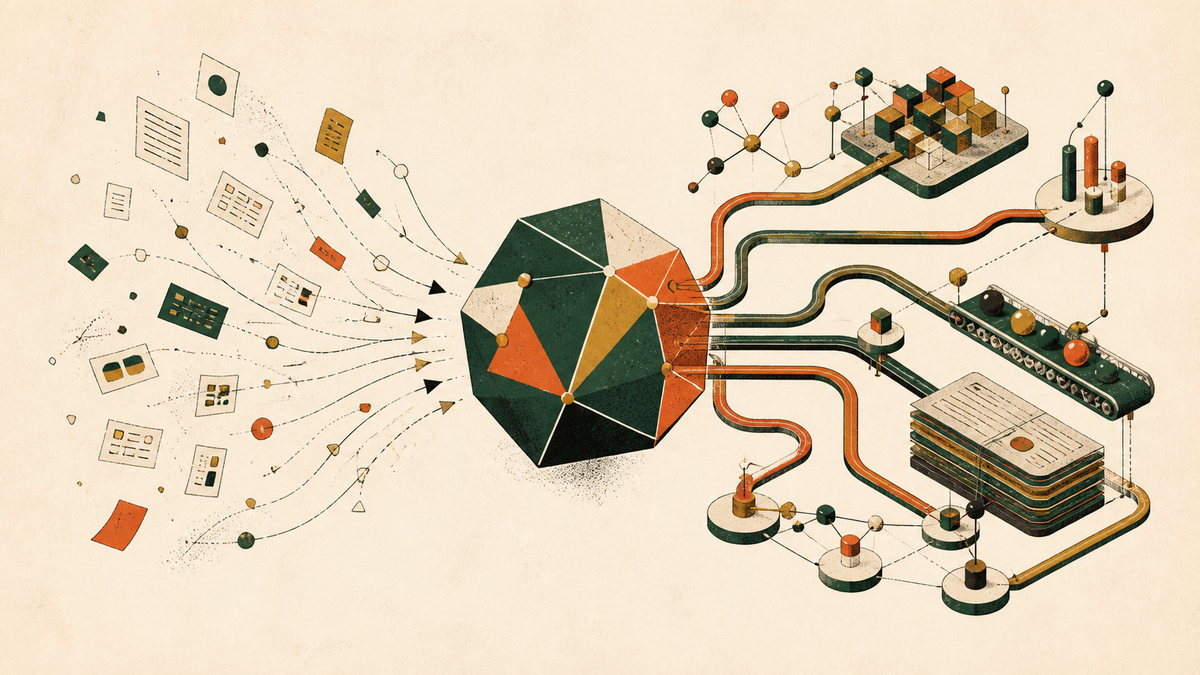
Some products are consumed by intelligence. Others are fed by it.
Knowing which one you are building might be the most important product decision you make right now.
Two products that got compressed into an answer
Stack Overflow was one of the most useful products on the internet because it reduced the distance between a developer's problem and a working answer.
Then the answer moved into the model.
A PNAS Nexus study found that the arrival of ChatGPT caused a meaningful decline in activity on Stack Overflow. The effect appeared across experience levels and was stronger in popular programming languages, exactly where the model had the most training data.
Stack Overflow did not suddenly become inaccurate. The journey became unnecessary for a large class of questions.
Chegg ran into a similar problem from the other direction.
In Q2 2025, Chegg reported revenue down 36% year over year and subscribers down 40%. The company specifically pointed to lower Google traffic, driven largely by AI Overviews. By Q1 2026, Academic Services revenue was down to $45.7 million.
ChatGPT could answer homework questions. That was only half the problem.
Google could now answer enough of them before the user even arrived.
Pew measured this more broadly in March 2025. When Google showed an AI summary, users clicked a traditional search result 8% of the time, versus 15% when there was no summary. Only 1% clicked a source cited inside the AI summary.
If your value can be fully delivered in a response box, the response box is slowly becoming your competitor.
Output businesses and outcome businesses
The cleanest distinction I have found is this:
- Output businesses sell the thing intelligence produces.
- Outcome businesses own what happens after intelligence produces it.
An answer is an output.
A resolved support ticket is an outcome.
A generated ad is an output.
Incremental profitable revenue from that ad is an outcome.
A legal summary is an output.
A reviewed, approved and filed contract is an outcome.
This sounds like wordplay until the model gets better.
If you sell outputs, better models push your marginal cost down. Nice. They also push everyone else's marginal cost down and make the output easier to absorb into a larger platform.
If you own outcomes, better models can increase your throughput, expand the number of cases you can handle and improve the economics of the workflow you already control.
That is complementarity.
The value ladder
I use a rough ladder when thinking about this:
Information -> Recommendation -> Creation -> State -> Action -> Transaction
The further left you are, the easier it is for a general model to compress your product into an answer.
The further right you are, the more the product depends on live context, permissions, integrations, judgement, execution and trust.
Information
"What does this error mean?"
Highly exposed. The model can answer directly.
Recommendation
"Which CRM should I use?"
Still exposed. The model can compare options, though current data and incentives matter.
Creation
"Make me a landing page."
More valuable, but increasingly abundant. The result still needs taste, deployment, analytics and iteration.
State
"Which leads have already spoken to sales, opened our last email and are at risk of going cold?"
Now the answer depends on a living system of record.
Action
"Re-engage the right leads, update the CRM and escalate the ones showing buying intent."
The product needs permission and a workflow.
Transaction
"Negotiate the renewal within these limits and close it."
Now identity, money, policy, audit and accountability enter the picture.
General intelligence will move right. Of course it will.
But every step right adds another boundary the model cannot solve through intelligence alone. It needs access to reality.
Why GitHub grew while Stack Overflow shrank
This is not a perfect comparison, but it is a useful one.
Stack Overflow's core unit was the answer. GitHub's core unit is the evolving software project.
AI can produce more code. That creates more branches, pull requests, tests, reviews, dependencies, security questions and deployed systems. In other words, more state to manage.
GitHub's 2025 Octoverse reported more than 180 million developers, 630 million projects and 43.2 million pull requests per month. GitHub also counted 4.3 million AI-related projects.
I would not claim AI caused all that growth. But the direction makes sense.
More code makes an answer forum less necessary for some tasks. More code makes a system for collaborating on code more necessary.
AI consumed one product's unit of value and multiplied the other one's workload.
That is the test.
The abundance test
Ask a second question:
When AI creates 100x more of the thing, who has more work to do?
If AI creates 100x more content, publishing the first draft gets cheap. Deciding what deserves attention, maintaining a point of view, distributing it and learning what changes behaviour become more valuable.
If AI creates 100x more software, typing code gets cheap. Repositories, deployment, observability, security and coordination become more valuable.
If AI creates 100x more product designs, drawing the first frame gets cheap. Systems for shared components, prototypes, critique and production handoff become more valuable.
Figma's 2026 AI report is interesting here. In its survey, the share of designers participating in development rose from 21% to 41%, while developers participating in design rose from 44% to 60%. AI did not simply make a canvas unnecessary. It pulled more people and more work into the collaborative system around it.
The winners around abundance usually own one of four things:
- the state generated work must attach to
- the workflow that turns an output into an outcome
- the trust required to let software act
- the feedback loop from what happened next
Systems of record are not automatically safe
There is a tempting lazy conclusion here: "Build a system of record and you are protected."
Nope.
AI can bypass software interfaces. It can read and write through APIs, MCP servers, command-line tools and browsers. A bad system of record is still a bad system of record, even if it has 14 tabs and a Salesforce integration.
What matters is whether you own current, consequential state and the right to change it.
Salesforce reported Agentforce and Data 360 ARR of $3.4 billion in Q1 FY27, up more than 200% year over year. ServiceNow said its AI products crossed $1 billion in annual contract value.
Those are company-reported numbers, but the product logic is clear. Enterprises are not paying only for a smart response. They are paying for intelligence attached to customer data, incident state, permissions, approvals and actions.
Shopify is moving the same way in commerce. Its Universal Commerce Protocol, built with Google and supported by a broad set of commerce companies, lets agents discover products, build carts and transact. A model may own the conversation. Shopify wants to own the commercial reality underneath it.
That is a much better place to be than owning one more shopping chatbot.
Fresh human reality is another form of state
Reddit is a strange but useful example.
An LLM can explain what people generally think about a camera, a city or an embarrassing health question. But when I want to know what people experienced this week, I still look for humans arguing in public.
Reddit's value is not only old text that can be trained on. It is a constantly refreshed map of what people care about, dislike, recommend and distrust.
In 2025, Reddit reported $2.2 billion in revenue, up 69%, while continuing to develop content-licensing revenue. The licensing business is still early and concentrated, so I would not over-read it. The interesting part is the mechanism.
AI increases demand for fresh ground truth because generated information decays into sameness. Current human behaviour becomes a scarce input.
Communities are not safe merely because they are human. Empty communities die. But a living network that keeps producing new reality is complementary to models trained on yesterday.
Seven questions I would ask before building
I have turned the idea into a simple founder checklist.
1. Can the model deliver the full value inside one response?
If yes, you are exposed. You need a reason for the user to enter a product after receiving the answer.
2. Does the product own live state?
Not a PDF uploaded once. State that changes and matters: account history, inventory, project context, permissions, relationships, money.
3. Can it take an action?
The more safely and usefully it can do, the less replaceable it is by a chat window.
4. Does more AI output create more demand for the product?
More code -> more GitHub. More merchants and agent traffic -> more Shopify. What is your version?
5. Does the product learn from outcomes unavailable to the base model?
Did the customer renew? Did the ad make money? Did the patient improve? Did the fraud review catch the right case?
A workflow with outcome data can compound. A prompt library usually cannot.
6. Is there a trust boundary the customer wants you to own?
Approval, compliance, provenance, identity, audit, payment, liability. Boring words. Often valuable products.
7. If the model vendor ships your feature, what remains?
"We will use a different model" is not an answer.
Distribution, state, workflow, transactions, community, brand and outcome data are answers. Some stronger than others.
Build where intelligence creates demand
I do not think AI kills software.
It kills some journeys through software. It compresses some products into a response. It makes a lot of previously expensive output nearly free.
Then it creates a mess around the abundance.
More code needs to be managed. More content needs to be filtered. More decisions need provenance. More agents need permissions. More actions need verification.
There is a large company inside each of those sentences.
So the question is not whether your startup uses AI.
The question is whether better AI finishes the user's job before they need you, or creates more valuable work for your system to do.
That is the AI Complementarity Test.
And I would rather answer it now than after the model gets 10x better.
Research note: figures were checked against the linked study, filings and company releases on 10 August 2026. Company-reported product metrics are identified as such. This essay makes a product framework, not a claim that AI alone caused each company's performance.