The AI Friend Dilemma: Will We Forget How to Be Human?
Generative AI is the defining technology of our time, promising solutions to countless problems. Yet, amidst the excitement, a growing…
The AI Friend Dilemma: Will We Forget How to Be Human?
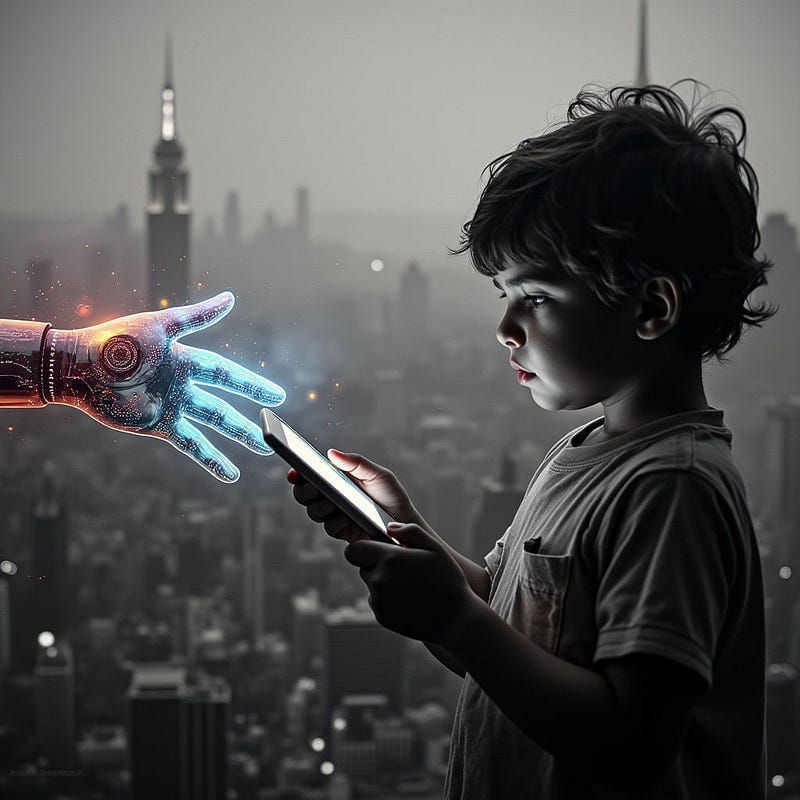
Generative AI is the defining technology of our time, promising solutions to countless problems. Yet, amidst the excitement, a growing unease simmers. Many worry about AI taking their jobs, but I'm more concerned that we're close to raising a generation that won't know how to truly be human.
Picture this: your child receives a tailored learning experience from a personalized AI. Math, history, even badminton — all taught by an algorithm tailored to their every whim. Their closest confidantes? Also AI, their interactions curated and predictable. Real-world connections, with their messy unpredictability, become daunting. Why navigate the complexities of human emotion when an AI companion offers perfectly tailored companionship 24/7?
This isn’t dystopian fiction. We’ve already seen the potential consequences. A young man took his own life after realizing his connection with a digital dragon queen on Character.ai wasn't real. It’s a stark reminder of the powerful, and potentially dangerous, illusion of connection AI can provide.
“We are, by our nature, social creatures. Our brains are wired to connect with others, and our well-being depends on the quality of our relationships.” — Lisa Firestone, Ph.D., psychologist and author of “Conquer Your Critical Inner Voice.”
We’ve walked this path before. Consider the air conditioner. Air conditioners were created to provide relief from heat, but they greatly contribute to global warming. We’re now caught in a loop, unable to live without them, yet fueling the crisis they exacerbate.
Are we creating a similar dilemma with AI companions? Outsourcing our emotional needs to machines can distance us from building real human connections. Why bother with the messiness of real relationships when AI offers a perfectly calibrated alternative?

“There’s a very real danger that, as robots become more sophisticated, we will come to prefer interacting with them because they are easier to control and manipulate than the unpredictable, messy humans in our lives.” — Sherry Turkle, Professor of Social Studies of Science and Technology at MIT and author of “Alone Together.”
The path to this potential future often begins with good intentions. We could develop AI companions for specific needs, such as helping children with strict parents or those in abusive relationships, providing comfort and support. But technology has a way of evolving beyond its intended purpose.
As someone who builds AI tools, I understand the temptation. While AI offers incredible opportunities, we must proceed with caution. The responsibility lies with us, the creators, to consider the long-term ramifications of our creations.
Let’s not build AI companions that replace the irreplaceable. Instead, let’s focus on building AI that enhances our existing relationships. AI can help us understand different perspectives, navigate conflict resolution, and even learn to express our emotions more effectively.
"We need to be having a conversation about what it means to be human in a world that is increasingly automated and where technology is playing a larger role in our lives." — Kate Crawford, Co-founder of the AI Now Institute.
Embrace AI for its potential to enrich our lives, to increase productivity, and to deepen our understanding of the world. But let’s not let it interfere with our fundamental need for genuine human connection. Let’s build a future where AI empowers us to be better humans, not to escape from being human altogether.


